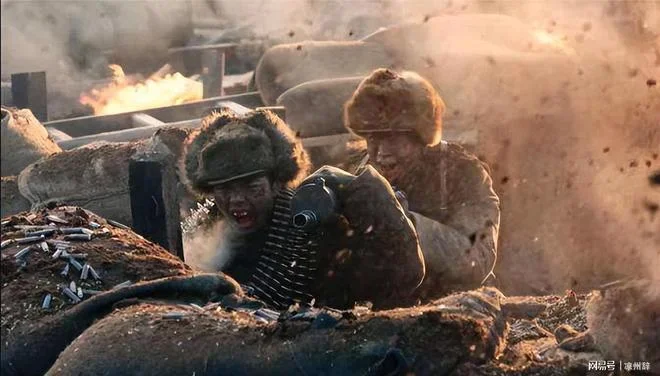

On October 10, 1948, as dawn broke over the coast of Jinzhou Bay, the cornstalks near Tashan Road were still wet with dew. Tashan was hardly a mountain—it was a stretch of low hills and flatland connecting the sea and land, barely ten kilometers wide. Yet it was the only dry route from Jinxi to Jinzhou.
Looking at the map of Northeast China, the strategic picture was clear: holding Tashan meant blocking Nationalist reinforcements from North China and the interior from linking up with Jinzhou’s defenders. Losing it would expose the rear of the Northeast Field Army besieging Jinzhou, unraveling the entire plan. This almost defenseless corridor became the critical throat of the campaign.
After Japan surrendered, a power vacuum emerged in the Northeast. The Nationalists initially occupied the major cities, while the Northeast Field Army dug into the countryside, building forces and stockpiling supplies. After three years of seesaw battles, the balance of power shifted from disparity to stalemate. In September 1948, the Central Committee decided to secure victory in the Northeast first before marching south. Jinzhou was the target—simple logic: “close the door to beat the dog.”
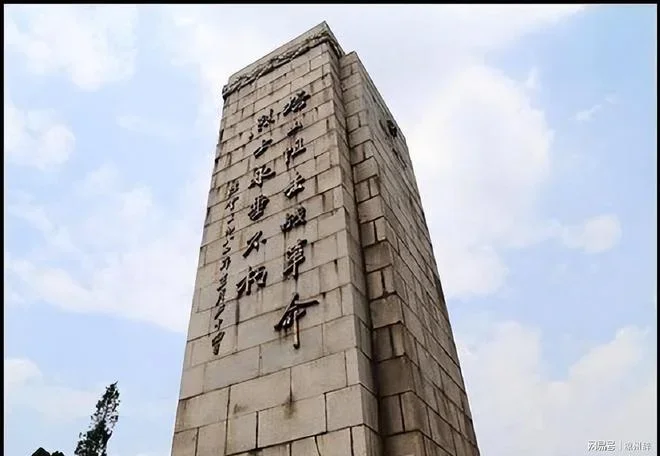
Jinzhou was the door bolt; Tashan was the keyhole. When Lin Biao, Luo Ronghuan, and Liu Yalou knelt around the sand table in the command post, their greatest worry was a two-pronged attack from Shenyang and North China. Lin Biao initially considered keeping the main force mobile along the Beining Railway. After several exchanges of telegrams, Mao Zedong’s stance was firm: take Jinzhou quickly. After weighing options, the front committee decided to besiege Jinzhou with six columns, while the Second Army Corps bore the critical task of blocking the “Eastward Advance Corps.”
Cheng Zihua took command and immediately led the Fourth and Eleventh Columns to Tashan. What they saw was a barren landscape of saline flats and desolate beaches, with only scattered mounds for cover. Engineer companies worked day and night, hauling stones and carrying railroad ties to build low trenches in the sandy soil. Wu Kehua touched the chest-high parapet and said firmly, “Even if only one man remains, he must stand here.”
On the afternoon of October 10, Fan Hanjie urgently radioed from the walls of Jinzhou as naval gunfire pounded the shore. The Nationalist Independent 95th Division was the first to land, with tanks kicking up dust as they charged the road. Tashan’s defensive line shook for the first time. As searchlights swept the front, a radio operator shouted hoarsely, “Report! The enemy is coming!” No sooner had he spoken than artillery shells rained down.
By evening, enemy planes strafed low, turning the sand into boiling geysers. Ground troops attacked in waves, three times forward and back. The Fourth Column moved machine guns to the edges of ruins, creating a web of fire just meters wide to block the charge. Darkness obscured the fire, but bayonets glinted fiercely. Hand-to-hand combat erupted repeatedly, with bodies piling up at the edge of the positions, neither side willing to retreat a step.
The next morning, the Northeast Field Army reorganized its companies into three lines. The forward positions absorbed the shock, the second trench near the road prepared for counterattacks, and the third line bundled railroad ties and repaired collapses. This rotation gave the defense newfound resilience. When Nationalist tanks blasted through a gap, they were met with a hail of bundled grenades that blew their tracks apart before they could deploy.
Interestingly, the enemy command was not unified. Que Hanqian wanted to rush ahead, but Luo Qi insisted on waiting for naval gunfire suppression. The delay cost them the twilight fog. Overnight, the Northeast Field Army dug two flanking communication trenches, and by dawn, Tashan stood like an immovable nail.
From October 12 to 14, the offensive escalated to a frenzy. Naval guns, heavy artillery, and bombers turned the area into a sea of fire, shaving a meter off the heights. The Northeast Field Army’s radio was knocked out, so Cheng Zihua had runners copy orders and paste them on ammunition boxes: “Position may yield ten meters, but resolve will not.” When out of ammunition, defenders grabbed enemy rifles; when artillery was destroyed, they used rocks as cover. Incredibly, positions that changed hands repeatedly were always retaken before dusk.
On the afternoon of October 15, Jinzhou fell. Gunfire spread from the eastern wall. News of the city’s capture shattered the “Eastward Advance Corps” morale. Artillery fire abruptly weakened, and enemy withdrawals turned chaotic. By nightfall, they could not mount another organized attack. On Tashan, the Fourth and Eleventh Columns, reduced to half their original strength, still stood in formation, their arms wrapped in blood-stained