

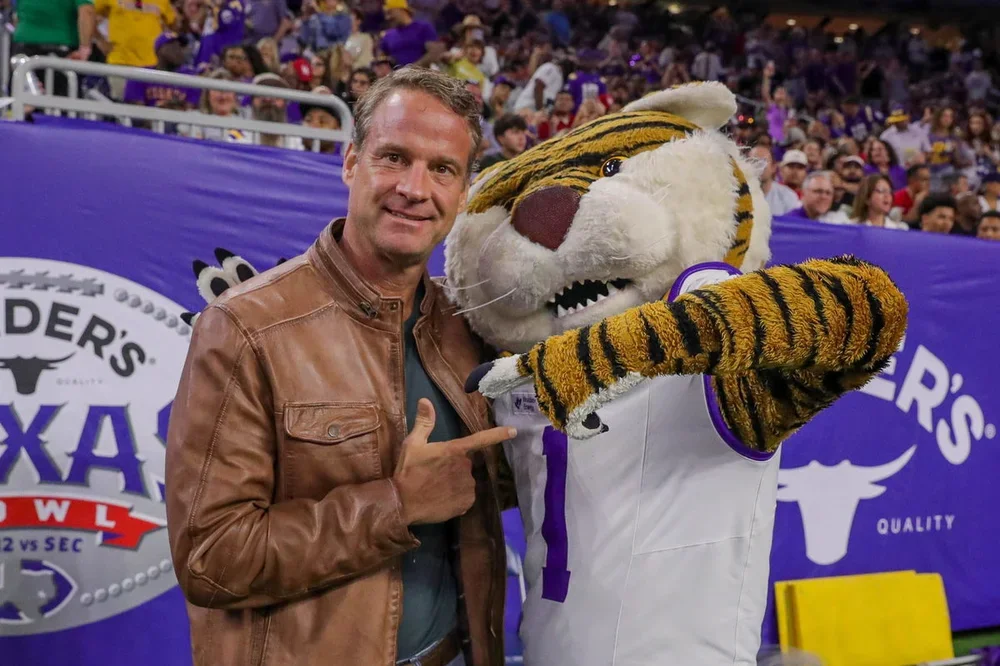
Lane Kiffin has hit the ground running at LSU, making an immediate splash in the 2026 transfer portal. The Tigers have poured money into roster building at a pace that already matches the total valuation of an entire SEC team, underscoring just how aggressive the new regime is.
According to a report from College Front Office, LSU’s total 2026 roster valuation is $42.84 million across 72 players. Of that, a whopping $26.13 million—about 61%—comes from transfer portal additions. The Tigers retained $12.59 million in talent from last season and added another $4.12 million through incoming recruits.
LSU didn’t hire Kiffin to take a patient approach. Reports earlier indicated the school lured him away from Ole Miss with a seven-year, $91 million contract, but what truly sealed the deal was access to more than $25 million annually in NIL and revenue-sharing resources to build the roster immediately.
The offensive starters alone are valued at $15.79 million, with two players already earning seven figures. Quarterback Sam Leavitt, the top transfer in this cycle, carries a $6 million valuation. Former Colorado five-star Jordan Seaton, the premier offensive line transfer, secured $4 million. Seaton recently explained why LSU became impossible to turn down.
“How could you not come here?” Seaton said. “There’s so many things great about this place, not just the history, but what we have now. I think that’s what makes this place great—is what we have now. The work that’s going to be put in, like that’s all I can preach about, is the work.”
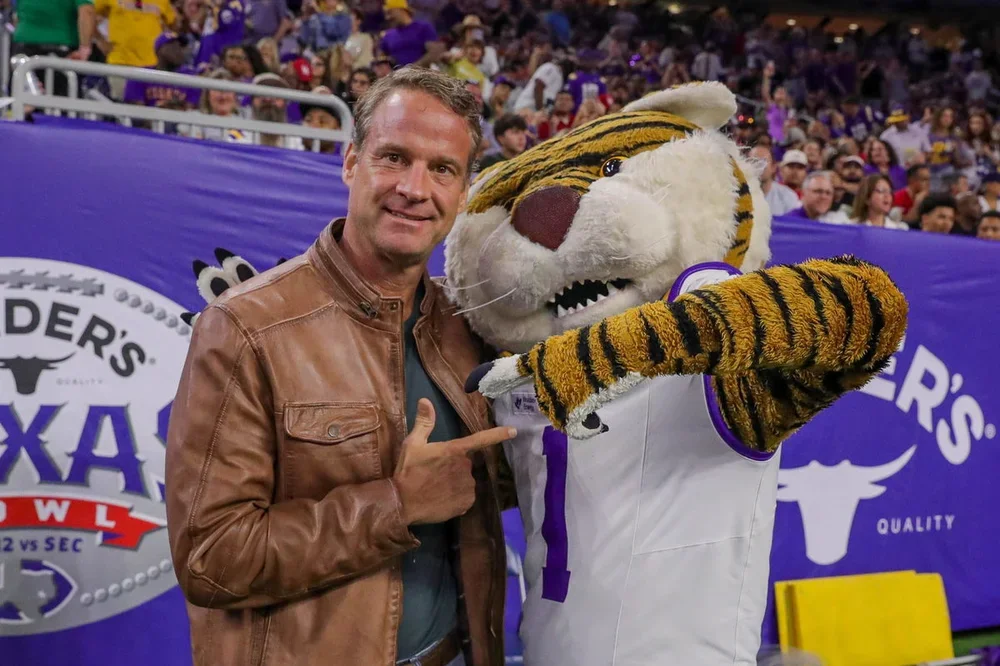
LSU’s defense is similarly stacked. Defensive starters are valued at $8.36 million, including two seven-figure players. Edge rusher Princewill Umanmielen, the top at his position, is valued at $1.5 million, while Jordan Ross also crossed the million-dollar mark.
Now compare that to Vanderbilt. The Commodores’ entire 2026 roster valuation stands at $26.13 million—exactly what LSU spent on transfers alone. Clark Lea retained $17.53 million in talent, added $6.43 million through the portal, and brought in $2.18 million from recruits. Vanderbilt’s offensive starters are valued at $7.84 million, defensive starters at $7.05 million, and only one player—quarterback Jared Curtis at $2 million—reached seven figures.
The gap reflects LSU’s win-now approach. “Why not win in Year 1?” one LSU donor said. “You don’t build stuff over three, four years anymore.”
Kiffin clearly understood the shift. And he recently opened up about why he felt LSU offered a ceiling-free opportunity compared to Ole Miss. During an interview with Vanity Fair, Kiffin noted that top recruits would tell him, “Hey, coach, we really like you. But my grandparents aren’t letting me move to Oxford, Mississippi.” In Baton Rouge, he said, that concern never comes up.
“Parents were sitting here this weekend saying the campus’s diversity feels so great: ‘It feels like there’s no segregation. And we want that for our kid because that’s the real world.’”
Demographics play a role: Oxford’s population is about 66% white and 26% Black, while Baton Rouge is 36% white and 51% Black. Kiffin added, “I just hope [my comment] comes across respectful to Ole Miss…. There are some things that I’m saying that are factual. They’re not shots.”
In short, LSU used transfer portal spending as a shortcut to contender status, while Vanderbilt spread the same value across a full roster. The message is clear: one program is trying to arrive now, not later.
